

The Nicene Creed is one of the most important statements of Christian faith. It provides a summary of Christian beliefs on the Father, Jesus Christ, the Holy Spirit, the Church, Baptism and eternal life. The Apostles’ Creed has been used in worship, for centuries, as a means for expressing their common beliefs and as a reminder of the core teachings of Christianity.
While there are many Christians that are familiar with the Nicene Creed due to the use of it in church services, its wording also has a rich historical and theological significance. It was conceived in significant debates in the early Church on the question of the identity of Jesus Christ and his relationship to God his Father.
In this guide, you will learn the full text of the Nicene Creed, an explanation of each line of the Nicene Creed, the history of the Nicene Creed and a comparison of the Orthodox and Catholic text of the Nicene Creed. Additionally, you’ll get to understand how to read it and learn its differences with the Apostles’ Creed.
What Is the Nicene Creed?
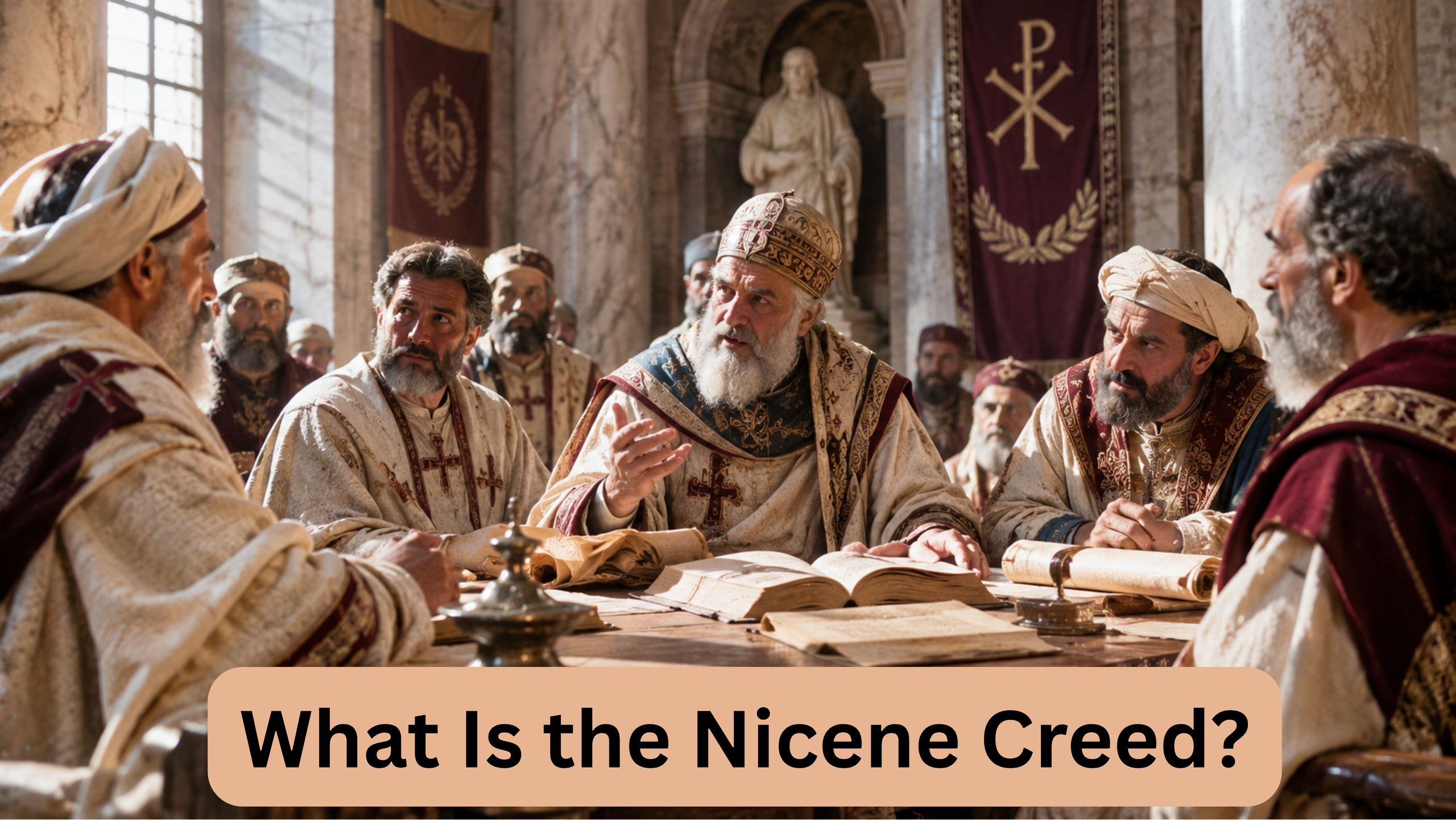
The Nicene Creed is a summary of fundamental Christian teachings on the life and work of the Father, Son and Holy Spirit, and about the hope for believers. It has its historical background in two early councils: Nicaea (325 AD) and in the Council of Constantinople (381 AD). It is now accepted and is used in many Protestant, Anglican, Eastern Orthodox and Catholic churches as an ecumenical statement of Christian faith.
Why Christians Recite the Nicene Creed
In the Nicene Creed Christians express their belief and recall the main elements entrusted to them by the Church. Its words bring together the worship community in a common confession which addresses particular themes relating to God, Jesus Christ and the Holy Spirit in the context of worship. Recite helps believers to grasp the principles of what they believe rather than just the teachings of Christianity dotted about. For so many churches the Creed can be an essential element of the Sunday eucharist or other services, reminding the faithful of what they have in common throughout the generations.
What the Nicene Creed Teaches About Christian Faith
The Nicene Creed professes God’s existence in trinity – as Father, Son and Holy Spirit. This stresses the humanity of Jesus Christ, who is not a created being, but truly divine, to save humanity. It also acknowledges the Holy Spirit as the Lord and Giver of Life. Outside the Trinity, the Creed teaches about the Church, baptism, resurrection and the life to come. These lessons in combination summarize beliefs that have formed the historic Christian theology and worship.
Is the Nicene Creed a Prayer or a Statement of Faith?
The Nicene Creed is not a prayer in which we ask God for something, but rather a statement of faith. It derives its name from the fact that it is a statement of Christian belief, ‘credo’ being the Latin equivalent of the word ‘believe’. It is frequently chanted during a service, however and so can serve as a devout expression of devotion. The words of the creed, when recited as a community by Christians, reveal what they believe concerning God and important points in the Christian teaching. Thus, it is as much a creed as a ritual of worship.
The Full Text of the Nicene Creed
The Nicene Creed can be used to perform worship Sundays and at other significant Christian functions. The Niceno-Constantinopolitan form is the generally known form of the Creed that is used today. The wording and get together of the various churches is the same, with small differences in the translation and wording, especially in the declaration of the Holy Spirit. The four sections below explain the English, Catholic, Orthodox and Latin statements and how they are related to the historical Creed.
The Nicene Creed in English
This is a traditional English translation of the “Niceno-Constantinopolitan” Creed, also known as the Nicene Creed. It is written in a language that is familiar through historic Christian worship in the English language. Some churches refer to the verses by such phrases as “of one Being” in place of “of one substance” and “Holy Spirit” in place of “Holy Ghost. The differences are mainly because of translation and liturgical tradition, but each time the text used must be compared to the church’s accepted text.
The Nicene Creed
I believe in God, the Father, the Almighty, Maker of heaven and earth, of all things visible and invisible.
One Lord Jesus Christ, the only begotten Son of God, begotten of the Father before all worlds, very God of very God; Light of Light, very God of very God; begotten not made; of one substance with the Father; by whom were made all things.
Who was born of the Virgin Mary by the power of the Holy Ghost and became man for us.
He was vertically crucified and buried also for us under Pontius Pilate. On the third day he rose again, according to the Scriptures and was seen to his twelve tribes: He ascended and sat on the right hand of the Father. And He shall come again with glory to judge both the quick and the dead; whose kingdom shall have no end.
The Holy Ghost, Lord and Giver of Life which with the Father and the Son together is worshipped and glorified, he which was spoken by the Prophets.
One holy catholic and apostolic Church I believe, I know and recognize one baptism for the forgiveness of sins. And I look for the resurrection of the dead and the life of the world to come. Amen.
Note: This is a traditional English rendering. The form used by the Eastern Orthodox includes this addition, a form used in some Catholic and other liturgical forms of the west now includes “and the Son” after “who proceeds from the Father.
The Nicene Creed Catholic Version
A key profession of faith of the Catholic Church is the Niceno-Constantinopolitan Creed, which it uses in celebrating the Eucharist. The “modern English word” represents all the elements of the original Latin text, such as one God, the Father almighty, true God from true God and of one Being with the Father. The phrase “from the Father and the Son” (ex patre et Filioque) is also part of the Catholic liturgy. This term is one that resonates with the western theological tradition and is one of the points of historical disagreement between the churches of the east and west. The Catholic Catechism provides information on this turn of phrase and how the Church understands it.
The Nicene Creed Orthodox Version
In the Eastern Orthodox Church the Nicene Creed is known as the Symbol of Faith and is known in the form of the Councils of Nicaea and Constantinople. It confesses the Holy Spirit as ‘Lord and giver of life’, ‘who proceeds from the Father’. The Orthodox service-words, which differ from the typical Western Catholic liturgical version, do not include the words and the Son. Orthodox Christians have maintained this language, as the version which has come down to them as the ecumenical Creed wording. The Creed is provided by the Orthodox Church in America and presented along with its historical significance in the Orthodox belief.
The Nicene Creed in Latin
The Nicene Creed is also popularly remembered by its Latin version, which, for centuries, has been utilized in and continues to be read at, the liturgy and liturgical writings of western Christians. The Catholic faith community is especially used to seeing the wording in a Latin language. The words Credo in unum Deum” (“I believe in one God”) start the confession of faith in the Holy Spirit with “Et in Spiritum Sanctum.
A traditional Latin form is: (The Filioque wording is part of the traditional Latin form, which is the so-called “western” wording):
Symbolum Nicaenum-Constantinopolitanum
I believe in one God, the Father all powerful, maker of heaven and earth, of visible and invisible.
ET IN UNUM DOMINUM, JESUM CHRISTUM, FILIUM DEI UNIGENITUM, ET EX PATRE NATUM ANTE OMNIA SAECULA. From this, the words of the Nicene Creed: Deum de Deo, lumen de lumine, Deum verum de Deo vero, genitum, non factum, consubstantialem Patri: per quem omnia facta sunt.
He descended out of heaven for us men and for us our salvation. Et de Spiritu Sancto ex Maria Virgine Incarnatus est, et homo factus est.
Passus et sepultus est et resurrexit tertia die secundum scripturas et ascendit in caelum sedet ad dexteram Patris. When he was coming a second time in glory, he would judge the living and the dead, and there would be no end to his kingdom.
Et hic Spiritum Sanctum Dominum et vivificantem, qui ex Patre Filioque procedit. Both before and with the Father, and also the Son, he adored and glorified the Holy Spirit, Who spoke through the Prophets.
Una, sancta, catholica et apostolica Ecclesia. Confiteor unum baptisma, in remissionem peccatorum. I look for the resurrection of the dead, and for life everlasting. Amen.
Note: This is a Western Latin form containing the Filioque. The 381 Creed used by the Eastern Orthodox Church does not include “Filioque.The Eastern Orthodox form of the Creeds is missing the Filioque.
Original Nicene Creed vs. Niceno-Constantinopolitan Creed
At the First Council of Nicaea in 325 AD the original Nicene Creed was adopted. It had emphasis especially on the divinity of Jesus Christ and rejected the concept of the Son as a created being. Most of the time, a shorter version of the niceno-constantinopolitan Creed is used, which was associated with the Council of Constantinople, which took place in 381 AD. This latter expression provides a more comprehensive description of the Holy Spirit, the Church, baptism, the resurrection and eternal life. While the two writings are roughly the same in name, it is important to differentiate between the two versions, Nicene Creed 325 and Nicene Creed 381, when discussing Christian history, as the Orthodox Church in America has written: <a href=”https://www.oca.org/orthodoxy/the-orthodox-faith/doctrine-scripture/the-symbol-of-faith/nicene-creed”>The Orthodox Church in America explains the distinction</a>.
The Nicene Creed Meaning Line by Line
The line-by-line commentary on the Nicene Creed helps make sense of the theological content of the Creed. Every statement leads to a bigger confession of who God is, Jesus Christ, the Holy Spirit and eternal life. Some are expressions arising out of the theological debates of the early Church, some are an encapsulated form of the key Christian teachings of salvation and worship. Simple language explains the meaning of each part, and why they continue to be important for Christians today.
“I Believe in One God, the Father Almighty”
The first words invoke faith in the one God which underlies belief in Christian monotheism. Accompanying God the Father Almighty is a statement of His authority, power and connection with creation. As Christians, we believe that God is the source of life and that nothing can exist without him. The word also ‘Father’ points to the personal relationship that is the core of Christian belief, not defining God as some impersonal force. With this opening comment the rest of the Creed, which explains the Christian understanding of the ‘Father’, the ‘Son’ and the ‘Holy Spirit’, follows.
“Maker of Heaven and Earth”
This says that God created all things, visible and invisible. It demonstrates that creation exists not independently of God, but rather as a dependent upon Him, as the Bible teaches. Christians know the universe, human beings and living creatures to be part of God’s creation. The term also is a reminder to believers that creation is valuable and that life is not random in this world. The Creed starts with the Name of God as the Creator of all things which puts all other Christian beliefs in the context of God’s power and purpose.
“And in One Lord Jesus Christ”
The Creed begins with faith in God the Father and then takes a step to the faith in Jesus Christ as the one Lord. In Christianity, the Lord signifies His High-Priestly significance and rule. Relying on the biblical texts, the Christians receive Christ not as a teacher, prophet, but as the Son of God, sharing in the divine nature of the Father. The word “one” is also a focus point that says that Jesus Christ is one, not a different godly element created alongside God. Both the Divine nature of Jesus and that He was the Saviour of mankind are introduced as the central Christian beliefs in this statement.
“The Only-Begotten Son of God”
Only-begotten Son” is a term that refers to the unique relationship between God the Father and Jesus Christ. It is not to say that Jesus, at a specific time, was created or came into existence. Instead God’s answer in Christian theology is to employ this terminology to describe the eternal relationship between the Son and the Father. Although the Son differs from the Father in personality, He is equal to Him in what is divine. This was a significant affirmation particularly in the early Christian controversies where believing that Jesus was merely another created entity was a road too far to take. It confirms His unmatched and everlasting identity.
“Begotten, Not Made, Being of One Substance With the Father”
This is one of the most important statements in the Nicene Creed that clearly spells out the Church’s belief regarding the divinity of Jesus. The words “begotten, not made” indicate that this Son is not created by God. Of one substance with the Father” refers to this Greek theological term, “homoousios,” which means that the Son has the same divine essence as the Father. The statement is a denial that Jesus is less in nature than God. It became an integral part of Nicene Christianity and its notion of the Trinity.
“Through Him All Things Were Made”
This verse gives us the teaching that Jesus Christ was a part of the creation of all things. It is representative of the beginning of John’s Gospel, where the Word was with God and through Him everything was created. Christians read the Son as not part of created things, but as divine, moreover, as divine and also in creation with the activity of the Father. This statement reinforces the earlier statement of the Creed that Jesus wasn’t created. It also indicates that the role of Christ is not confined to His life on the earth, but is bound up with the entire universe as well.
“For Us and for Our Salvation”
These words give us the answer as to why Jesus Christ looked upon the world. Christians believe that His ministry brought us salvation and His reconciliation to God. It is a claim that shows how important the life, death and resurrection of Jesus is to the Christian understanding of redemption. It doesn’t only say that salvation is a feat of mankind, but rather what God through Christ has made possible. These words also remind believers that the Creed is not only a historical document with regards to theological debates. It is a reflection of the Christian view on love and God’s intentions for mankind.
“He Came Down From Heaven and Became Incarnate”
The word “incarnate” refers to the fact that the Son of God became man. Christians hold that it was not just a pretense Jesus put on, it was that Jesus entered into human life, lived it and yet stayed divine. “Came down from heaven” indicates that his earthly life was not a natural one but God’s work as well. The statement also emphasizes on the Virgin Mary and the role of the Holy Spirit in giving birth to Jesus. It is a foremost statement of the Christian teaching of Incarnation.
“He Was Crucified, Suffered and Was Buried”
In the name of Jesus this statement recalls the sufferings and the death of Jesus when He was under Pontius Pilate. Because then Pilate was added to the story and it became a statement in history, not symbolic history with no time frame. Christians believe that Jesus actually suffered and died and that His burial helps to substantiate that. The crucifixion is an important aspect of Christian teachings to do with salvation, sacrifice and reconciling with God. Incorporating these occurrences, the Creed branches out the Christian verities to the historical life and death, of Jesus Christ.
“He Rose Again on the Third Day”
A major belief of Christianity is that of the Resurrection. That Jesus Christ is risen from the dead, on the third day after His crucifixion and burial. Christians believe that the Resurrection was a sign of Goodnization of God and of Jesus’ identity and Ministry. This also establishes the basis of Christian hope for life after death. The phrase, “according to the Scriptures”, leads us to link this event with the accounts in the Bible and the early Church’s understanding of God’s promises. The Christian message would be incomplete if there were no resurrection.
“He Ascended Into Heaven”
This “Ascension” is a Christian doctrine that the resurrected Jesus merged with the Father after His death. The Creed sets this event in the ongoing saga of Christ’s mission: it was not His earthly ministry that came to an end in the empty tomb. Christians believe Jesus has been raised up and is sitting down with the Father. The Ascension also has a connection with the promise of the Holy Spirit and the mission of the Church which continues. For believers, this means a confidence that even though Christ is physically gone this is not to say that He is not central to the Christian life and worship.
“He Will Come Again in Glory”
This is a declaration of the Christian expectation of Jesus’ return at the end of the world – in glory! It is an indication of what is still to come, as well as the ultimate destiny and the plans of God for creation. For Christians, this promise is a motivation for living with faith, responsibility and hope. The Creed doesn’t give a date or a program of when Christ is coming again. Rather, that gives assurance that history is progressing toward a final fulfillment under God’s control. The particular promises may serve to remind believers of their faith and add hope for their life beyond the earth.
“His Kingdom Will Have No End”
His kingdom will have no end” means that Christ rules forever and ever. The kingdom of God is not like the kingdoms of this world, which have political changes and human conflict, but it is a kingdom that never ends. Christians make this a connection to the biblical message of Jesus reigning in divine authority and that His kingdom will ultimately be fulfilled. It has hope that transcends history and assures the faithful that God’s intentions are not time-bound. The letter also states that the character of the Creed’s message – Jesus is the true God & should be worshipped.
“I Believe in the Holy Spirit”
Now the Creed comes to the third member of the Holy Trinity—”the Holy Ghost.” Christians not only know that the Holy Spirit is a force, symbol or created messenger, but they also believe that the Holy Spirit is truly divine. The Spirit is known to be involved in the life of the Church and in the spiritual life of believers. This declaration had a particular significance in the early Church as some aspects of the nature of the Holy Spirit were in doubt. In believing in the Spirit, Christians by that same act declare that the Father, the Son and the Holy Spirit are different persons in the one God.
“The Lord and Giver of Life”
The title “Lord and Giver of Life” gives us an expression that reveals the divinity and life-giving activity of the Holy Spirit. For Christians the Holy Spirit is seen as being at work in creation, in spiritual renewal and in the life of the Church. “Giver of Life” also suggests the importance of the dependence of spiritual life and holiness on God’s grace. This was highly important as there were some original doctrines about the Holy Serpent that made the Holy Spirit to be less than fully God. It is therefore an understanding of the Spirit that the Creed does not accept as it situates the Spirit in the worship and confession of God. It acknowledges that the Spirit is worthy of divine honours.
“Who Proceeds From the Father”
This phrase refers to the relation of the Holy Spirit to the Father: in eternity. The cosmic form of the Creed known as the Creed of 381 confesses the Spirit of the Father. The wording has been maintained in the liturgy of the Eastern Orthodox churches. The Filioque, the words “and the Son”, were subsequently added to the western tradition of Catholic church thought and practice. The contention is over the relationship of the Spirit and the Son and the father, what is expressed, or how. What they both agree on is the divinity of the Holy Spirit, but the wording and theological account of the procession, varies between the two traditions.
“One, Holy, Catholic, and Apostolic Church”
This is a description of the four attributes that have been traditionally attributed to the Church. The meaning of “one” is from the unity of the Christian Church, “holy” is directed at the call of the Christian Church to belong to God, “catholic” is directed at the universal character of the Christian Church and “apostolic” is directed at the teaching and witness of the apostles. In this context, ‘catholic’ cannot have the contemporary connotation of the Roman Catholic Church. It symbolizes the universal aspect of the Church. The statement reminds the Christians that they live their faith in a community that has its roots in the teaching of the Apostles.
“One Baptism for the Forgiveness of Sins”
This is an expression to believe that there is one baptism in connection to being in the life of the Church and the forgiveness of sins that is part of the Christian faith. There are various ways of understanding the sacrament or ordinance of baptism in different Christian traditions but it is clearly a key element in the Christian confession found in the Creed. Baptism is related to repentance, faith and new life in Christ. It also mirrors how the early Church did embrace believers as part of the community by baptizing them. It reminds Christians forgiveness and renewing their spirit are a significant aspect of the message of salvation.
“The Resurrection of the Dead and the Life of the World to Come”
The last recital is an anistic reference to the future hope of Christianity. It admits death is not the end of personal human life and God will raise the dead. The life of the world to come” is a term to signify hope for eternal life and the actualization of God’s plans. On the one hand, Christians see this promise in reference to the resurrection of Jesus, which is the basis for their hope. The Creed concludes with “Amen” which means “Agree”, and Faith”.
History of the Nicene Creed
The Nicene Creed arose out of this context of early Christians debating significant issues of Christology and the Trinity. There were differences between various teachers, who explained the relationship of the Son and the Father in conflicting ways, resulting in conflict and disunity among Christian communities. In order to reconcile these disagreements and make a common declaration of faith, church leaders convened in ecumenical councils. The Council of Nicaea (325 AD) and the Council of Constantinople (381 AD) were particularly significant as they were responsible for the formulation of the Creed that has become current use by many churches. The Council of Nicaea (325 AD) and the Council of Constantinople (381 AD) were particularly significant. The Orthodox Church in America provides a historical overview.
When Was the Nicene Creed Written?
Two key dates lie in the history of the Nicene Creed: 325 AD and 381 AD. The first form, which was adopted at the Council of Nicaea (325), was with the main goal of clarifying the Church’s teaching about Jesus Christ. The longer form used by the Council of Constantinople, in 381, extended the confession, particularly the clause on the Holy Spirit. The most widely-used version of the creed today is the Niceno-Constantinopolitan creed. So it depends on whether one refers to the ‘original’ Creed of 325 or the ‘fuller’ Creed that dates from around 381.
The First Council of Nicaea in 325 AD
The First Council of Nicaea was held in 325 AD, in the city of Nicaea, today’s İznik, Turkey. Constantine called the meeting in order to discuss troublesome differences that plagued the Christian Church, such as the question of Jesus Christ and the teachings of Arius. The council confirmed that the Son was consubstantial (of the same substance) with the Father and rejected the teachings that the Son was a created being. This statement of faith became the Nicene Creed, which was later to be a foundation of subsequent Christian discussions on Trinity.
Who Was Emperor Constantine I?
Constantine I was a Roman emperor in the early 4th century who had a significant influence in the way that the Roman Empire and Christianity were related. He was a promoter of Christianity and fostered an environment where church leaders were able to meet more openly after gaining power. He called the Council of Nicaea in 325 AD, to settle issues which threatened unity in the Christian community. Constantine’s role was not only religious but also political—he desired a peace in the empire. But, the council’s theological decisions were done by the bishops and not by the emperor alone.
What Was Arianism?
In the Christian Church, Arianism was a theological belief that was taught by Arius, a Christian presbyter from Alexandria. To put it in a simple way, that Arius taught that the Son was not “always,” as the Father was “always,” but was created by the Father. That created Jesus to be fully divine? Many church leaders found this unacceptable because they felt it went against Christ’s worship in their church, and what they believed about the identity of Christ. This controversy was one of the most significant issues in the Council of Nicaea.
Why Did the Council of Nicaea Reject Arianism?
The Council of Nicaea condemned Arianism because the bishops taught that Jesus Christ is truly God and of the same divine nature as the Father. To express this belief, the council used the Greek word, homooeousios, which is normally translated as “of one substance” or “of one essence. The object of this language was to establish the fact that the Son was not a created being nor a less than divine being. The ruling set an important limit for Nicene Christian belief and helped to determine the subsequent explanations of the relationship of the Father and the Son.
The Council of Constantinople in 381 AD
It was in 381 AD, many years after Nicaea’s first Council. It reaffirmed the Nicene faith and was traditionally linked to the extended form of the Nicene Creed, which is the form used in the present liturgy. An important point of note here was that it changed its portrayal of the Holy Spirit, describing the Spirit as the Lord and the giver of life, proceeding from the Father and worshipped and glorified together with the Father and the Son. This contributed to the Church’s awareness of the divinity of the Holy Spirit and was an important step in the development of the Creed.
How the Nicene Creed Developed Into Its Present Form
The Creed was produced as a result of the theological discussions and decision making processes of the early Church. In the 325 form, the emphasis lay in the connection between the Father and the Son, even though the other parts of the Christian creed were spoken; in the form of 381, the addition was a more complete description of the Holy Spirit as well as other elements of Christian beliefs. Later the extended Creed was adopted as an authoritative statement of faith throughout the larger Church. In the following centuries, variations arose in particular the way of translating and liturgical usage, such as the Filioque added in the West. The USCCB offers a <a href=”https://www.usccb.org/resources/filioque-a-church-dividing-issue.pdf”>historical explanation for the changes in wording of the Creed and the Filioque</a> that the other churches have used today.
What Is the Difference Between the Catholic and Orthodox Nicene Creed?
The Catholic and Eastern Orthodox Christians believe in the Nicene faith and have the Creed as an important confession of faith. Theirs is the most popular variation and it is in the wording for the Holy Spirit’s procession. Whereas the Western Catholic version is more likely to include the Filioque clause, “and the Son”, the Eastern Orthodox version still retains the “who proceeds from the Father.” The Filioque / relationship between the East and West / theology is covered in the Catholic Catechism part one, section two, chapter one, article one at paragraph two of the <i>The Father</i> section.
Catholic Nicene Creed
The Niceno-Constantinopolitan Creed is a central element used in the liturgy, specifically in the celebration of the Eucharist, on Sundays and during solemnities, by the Catholic Church. However, the Creed does not exist in this form outside the West, it is always said that the Holy Spirit proceeds from the Father and the Son. According to Catholic teaching the two begetters of the Spirit—the Father and the Son—are not two distinct principles, but one. That the Filioque is an expression of the eternal relationship within the Trinity is something the Church understands. The Catholic Catechism also admits that this is not part of the original 381-composed Creed.
Eastern Orthodox Nicene Creed
In the Eastern Orthodox Church they read the Creed without adding and the Son. This wording is important to Orthodox Christians as it is the wording given of the Ecumenical Creed. The centrality of the real Person of the Father in Orthodox theology highlights his priority in the triune God, but also apportions a substantial role to the Spirit in relation with the Son, as eternal. The Orthodox view is to affirm the divinity of the Son as well as the relation of the Spirit to Him. Instead, it is one of the ways in which the mystery of the Trinity is expressed and it is in the language of the traditional Creed.
Differences in the Holy Spirit Statement
The slightest variation between common Catholics and the Orthodox is in the sentence on the Holy Spirit. According to the Catholic Western version, the Spirit proceeds from the Father and the Son and according to the Orthodox form, it proceeds from the Father. An exact same dissimilarity can’t be an issue of translation. It shows different theological solutions to the problem of the connection of the divine persons. Every tradition professes belief in the divinity of the Holy Spirit and worship Him alongside the Father and the Son. They disagree about His eternal march, that is, what is the manner in which it is to be expressed?
The Filioque Clause Explained
In Latin, the word Filioque means and the Son. It designates the extra phrase used in the Nicene Crede of the Western church that runs: From the Father and the Son. This phrase does not appear in the original Greek wording of the Creed that was accepted at Constantinople in 381. It entered the liturgy of the West and the theology of the Catholic church. The Orthodox Church can’t handle its unilateral addition to the Creed. To appreciate the Filioque is key to comprehending one of the historic theological issues between the East and West in Christianity.
Why the Filioque Became a Major Church Disagreement
The Filioque was a big point of contention because it had theological implications as well as implications of altering a shared ecumenical Creed. Eastern Christians were protesting that the words had been added that were missing in the original text agreed upon by the ecumenical Councils. Western theologians justified the words so often used to refer to the eternal relationship of the Father to the Son. This disagreement over the years became part of broader relations between the Eastern and Western Churches. This played its part in the complex history that led to the separation which is generally linked with the Great Schism of 1054, but which had several causes.
Nicene Creed vs. Apostles’ Creed
There are two significant Christian creeds: Nicene and Apostles’. Essentially they both highlight important lessons concerning God, Jesus Christ, the Holy Spirit, forgiveness, resurrection and eternal life. But they arose in varied historical settings and have different roles in Christian worship and teaching. The Nicene Creed is longer and more elaborate in its explanation of Christ’s divinity and the Trinity and has close connections with the Western Church, which was baptized by profession using the Apostles’ Creed.
What Is the Apostles’ Creed?
Apostles’ Creed is a very ancient Christian statement of belief, supposedly dating to the earliest apostolic times. It originated from the old baptismal confessions and was popular in the West Church. It covers the Faith in the Father, Son and the Holy Spirit, the Church, FORGIVENESS OF SINS, Resurrection and Eternal Life. It’s a bit like the Nicene Creed except for the absence of the same elaborate descriptions of the relationship of the Father to the Son. It still has a place in Catholic, Anglican, Lutheran and other Christian traditions, especially among teachers and devotional writers.
Key Differences Between the Two Creeds
The alterations between the Nicene Creed in addition to the Apostles’ Creed are in detail and historical purpose. The Apostles’ Creed is a briefer statement of Christian belief and the Nicene Creed has been worked up in answer to theological arguments, particularly concerning the divinity of Christ. The Nicene Creed clearly confesses that the Son is “of one substance” or “of one Being” with the Father and offers a more complete statement regarding the Holy Spirit. Though the Creeds state key Christian beliefs, the Nicene Creed has additional language that focuses on the Trinity.
Why Do Churches Use Both Creeds?
Creeds are utilized by churches for both are convenient expressions of the Christian faith. Brief enough to learn and use, the Apostles’ Creed is appropriate for study, for preparing for baptism and for personal recitation as a devotional. The Nicene Creed provides a more complete understanding of the Trinity and who Jesus Christ is, and is of greater significance in formal worship and teaching of theology. There are variations in their use among Christian traditions and among churches. These two Creeds are not in opposition to each other but, in fact complementary, with the second one describing the same Christian beliefs as the first one, albeit with a greater level of detail.
How to Pronounce the Nicene Creed
When the Nicene Creed pronunciation is known, it helps the reader or reciter confidently recite the text during church worship or when by himself or herself. Words are used that would not be recognised by a modern reader, some are unchanged from an older English translation and others may be derived from Greek theological vocabulary or Latin expressions. But pronunciation may have minor variation amongst regions and even amongst churches. This guide will concentrate on the English name of the person/place and theological terms that readers are likely to come across. It is good to hear the version of the Creed that your church uses when learning the Creed.
Nicene Creed Pronunciation Guide
The word ‘Nicene’ is pronounced as NYE-seen and the word ‘Creed’ is one syllable, rhymes with ‘need’. But “Nicene Creed” is pronounced together as nye seen KREED. Nicene is derived from the ancient city of Nicaea where the first ecumenical council was held in 325 AD. Although there may be minor differences among English speaking communities, the 2-syllable pronunciation of Nicene is common. The title may be rehearsed beforehand which can help with discussion of the Creed and its historical background.
How to Pronounce Difficult Words in the Creed
There are words in the Nicene Creed which will be difficult, particularly in older English translations. Consubstantial, pronounced kon-sub-STAN-shul is sharing the “same divine substance” or “the same divine essence.” Incarnate’ is said in-KAR-nayt meaning the Son became man. In the Creed, the word catholic is traditionally said with the Catholic pronunciation KATH-uh-lik, whereas the pronunciation for the word apostolic is ap-uh-STOL-ik. It can be helpful to know what these words mean as well as how they are pronounced to make saying the Creed easier and to avoid reading what is not used.
How to Learn and Recite the Nicene Creed
Begin by reading (slowly) the Nicene Creed and marking out the major parts into belief in the Father, belief in the Son, belief in the Holy Spirit, belief in the Church and belief in eternal life. Don’t memorize the entire text at once, practice one section at a time. You can sometimes listen to a recording from your own church tradition to get a sense of the rhythm and pronunciation of your church worship. I can also read words aloud following the text. Once you know each statement, meditate on its implications, so that the recitation of the Creed not only considers them, but also becomes your own act of faith.
Why Is the Nicene Creed Important Today?
We still find the Nicene Creed relevant because it gives us a succinct overview of a set of beliefs which have been significant for many centuries to the worship and theology of Christians. It links contemporary churches and the early Christian communities which came together to explain the meaning of their faith. Its teaching on the Trinity, Jesus Christ and the Holy Spirit and eternal life, continues to shape the Christian identity throughout traditions. Even though there are theological differences in explanations and liturgical changes in the wording of the Creed, it is still a great statement of historic Christian belief.
The Nicene Creed as a Foundation of Christian Belief
The Nicene Creed is used as a basis to understand the main teachings of Christianity. It teaches Christians who God is, the importance of Jesus Christ in their salvation and the understanding of the Holy Spirit in the Trinity. It also links these to the Church, baptism, the resurrection and to life. For many Christians, studying the Creed is a beginning place in learning theology and grasping the underpinnings of their tradition. Through its words it has been able to maintain a language of faith through the years and continues to be basic to Christian teaching.
How the Creed Connects Christians Across Traditions
Through a confession of God, Jesus Christ and the Holy Spirit, the Nicene Creed is a link to many Christian traditions. Its importance is recognized, although frequently its liturgical language and theological interpretation vary, by not only the Catholics but the Eastern Orthodox Christians, Anglicans, Lutherans and other Protestants. It is an ongoing use of a common point of connection between churches with different histories, worship and organization structures. The Creed doesn’t resolve all differences between Christian communities, but it says a lot about the common beliefs of Christians. This common bond is particularly significant when it comes to the dialogue of unity among Christians.
Why Churches Still Recite the Nicene Creed
The churches still use the Nicene Creed, as it aids them in articulating their beliefs as a community in worship. The words are a reminder to believers of the core teachings of Christianity and a link between today’s worship service and the life of the early Church. The Creed can be recited to help new Christians get acquainted with the principles of their faith. In a variety of traditions it takes part in the Eucharistic or Sunday service. Its message is timeless and relevant to the Christians still contemplating the nature of Jesus, the Holy Trinity and the promise of Resurrection.
Do All Christians Believe in the Nicene Creed?
The Nicene Creed is accepted in a diversity of Christian traditions, yet not all groups use it or interpret all its statements in the same way. It is an important expression of historic Christian faith valued by Catholic, Eastern Orthodox and many Protestant churches. Whilst this may be accepted by other communities, it may be rejected in some communities due to their traditional beliefs regarding the Trinity and the complete divinity of Jesus. A key to a better understanding of these differences lies in a consideration of the separate denominations and their teachings—and not in an assumption that all Christians share the same belief.
Do Catholics Accept the Nicene Creed?
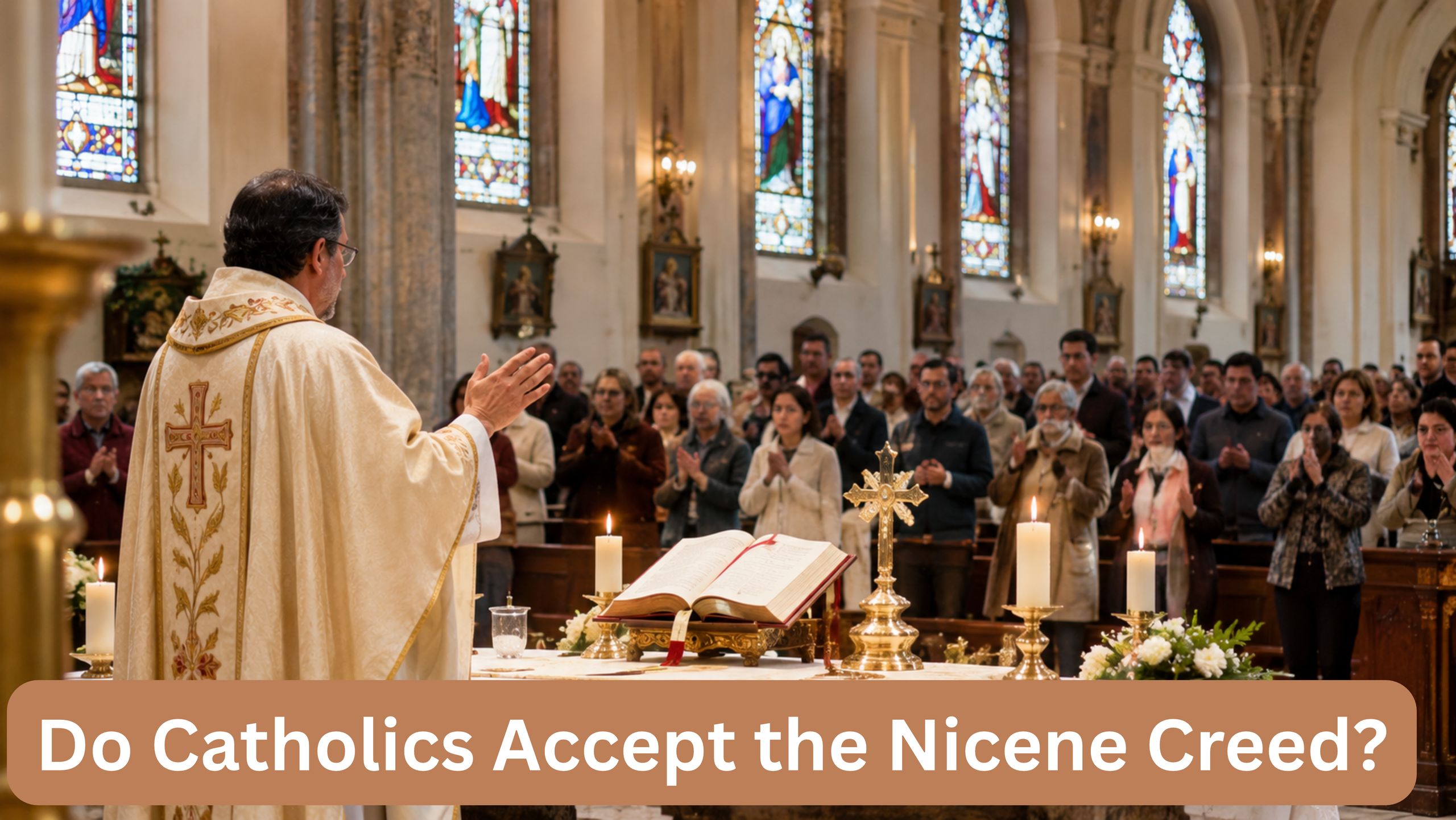
Yes. In the Catholic Church, the Nicene Creed is a significant expression of faith which is used on Sundays in the Eucharistic liturgy and on some solemnities. It is an encapsulature of Catholic beliefs concerning the Father, the Son, The Holy Spirit, the Church, Baptism, Resurrection and Eternal Life. It is the Catholic form that normally has the Filioque word added on, “and the Son. The Creed is also treated in the Catechism of the Catholic Church as it is part of the explanation of Christian belief.
Do Eastern Orthodox Christians Accept the Nicene Creed?
Yes. The Nicene Creed (or Symbol of Faith) is a central feature in Eastern Orthodox Christianity. It is chanted throughout the Divine Liturgy by Orthodox Christians and is considered to be a strong statement of the ecumenical faith, as it was affirmed at the great early councils. The halfway point is their “Philioque,” which keeps the text that the Holy Spirit proceeds “from the Father,” rather than from the Holy Spirit and the Father. The Orthodox belief in the Holy Trinity, the Incarnation of Christ, in the Church, in baptism and in the Resurrection of the Dead, is conveyed in the Creed.
Do Protestants Accept the Nicene Creed?
The Nicene Creed was a significant statement of historic Christian belief undertaken by many Protestant churches. In worship, it is part of the traditions of the Anglican, Lutheran, Methodist, Presbyterian and some Reformed churches, and is of theological significance. In general, these churches believe in its teaching of the Trinity and the divinity of Jesus Christ. The Protestants, however, do not agree about the frequency with which the Creed is recited, nor do they agree on the authority of the historic church councils. It would thus be better to refrain from claiming universal rejection and use by all Protestants and instead state that acceptance and use depends on the denomination in question.
Do Baptists Reject the Nicene Creed?
The Nicene Creed is not universally rejected by the Baptists. Many Baptist churches embrace the core teachings — the three fundamental Baptists beliefs — in one God, in the Trinity and in the complete divinity of Jesus Christ. But Baptist traditions usually take their authority from Scripture first and do not take historic creeds as authoritative statements of the church. Some congregations say the Nicene Creed, some congregations highlight their congregational statement of faith or affirmation of the Bible. Hence, the use of the Creed varies with the denomination, congregation and worship life of the Baptists.
Which Christian Groups Do Not Accept the Nicene Creed?
However, there are some Christian communities which have abandoned the Nicene Creed, arguing against its traditional interpretation of the Trinity and the full divinity of Jesus Christ. Some of the groups most commonly pointed to in this regard are the Jehovah’s Witnesses and some of the non-Trinitarian groups. There are also some churches that disagree on the authority and/or the wording of historic creeds, but not on every belief that the creeds hold. When we discuss these groups it’s important to note that it’s not just the case that these are groups that don’t recite the central theology of the Creed but refuse it. It is important to view each community from their own ‘official’ statements of belief.
The Nicene Creed
Conclusion: Why the Nicene Creed Still Matters
The Nicene Creed is one of the most important declarations of the historic Christian creed. It is used by Christians to articulate their belief concerning the Father, the Son and the Holy Spirit, from its inception at the Council of Nicaea in 325 AD to its extended version in association with the city of Constantinople in 381 AD. It also contains words that elucidate profoundly important lessons concerning salvation, the Church, baptism, resurrection and eternal life.
Reading the Nicene Creed (line by line) helps you to see the meaning of what you are saying in church worship. It also explains the differences between the Catholic and Orthodox traditions, as well as the meaning of the Filioque and how the Nicene Creed is connected to the Apostles’ Creed.
From the study of the Christian history, the learning of the Creed for churches to know different Christian traditions and their faith, it is important to learn its message and know the foundation of Christianity beforehand. The Nicene Creed is much more than an ancient statement – it still binds generation after generation of Christians together with a common statement of faith.
Frequently Asked Questions
What Is the Full Nicene Creed?
The Nicene Creed starts off with “I believe in one God” and is followed by many more statements regarding Jesus Christ, the Holy Spirit, the Church, baptism, resurrection and eternal life.
When Was the Nicene Creed Written?
The original Nicene Creed was written in 325 AD. This is the expanded form which is in common use. The Council of Constantinople in 381 AD is associated with this expanded form.
What Is the Main Message of the Nicene Creed?
Its central theme is the doctrine of the unitary nature of the Trinitarian God, the Father, the Son, and the Holy Spirit—including the divinity of Jesus Christ and Him as the savior of mankind.
Is the Nicene Creed Catholic or Orthodox?
It is important to both Catholic and Eastern Orthodox Christians. It is used by both traditions, but in their common liturgical forms, there are some differences in the words used speaking of the Holy Spirit.
What Is the Difference Between the Nicene Creed and Apostles’ Creed?
Nicene Creed explains the Trinity and divinity of Christ in more detail and Apostles’ Creed is a shorter outline of the major tenets of Christian theology.
Is the Nicene Creed a Prayer?
First, the Nicene Creed is such a statement of faith as opposed to a petitionary prayer. A similar expression of devotion and belief, however, is the daily recitation of it by the Christians in worship.
What Does “One, Holy, Catholic and Apostolic Church” Mean?
The Church is characterized by these four words: united, of God, catholic (universal), apostolic (from the teaching and witness of the apostles).
What Is the Filioque Clause of the Nicene Creed?
The Filioque is the translation of the word and the Son.The Filioque translates literally from Latin to say or mean the Son. It is found in the common Western Catholic version, but is not found in the Eastern Orthodox version.
Do Baptists Believe in the Nicene Creed?
Though not all Baptist churches enunciate it or use historic creeds as definitive rules, many Baptists are in accord with its fundamental teaching on the Trinity.
What Is the Original Nicene Creed?
The original Nicene Creed is what was adopted at Nicaea in 325 A.D., before the expansion that was adopted in 381 A.D.
How Do You Pronounce the Nicene Creed?
The word “Nicene” is pronounced ‘NYE-seen’ and “Creed” sounds like ‘need’. Its full name is actually read as “NYE-seen KREED”.

